If you are thinking about moving to Philadelphia County, daily life can feel more connected, walkable, and neighborhood-focused than in many other places. With a dense city layout, a strong transit network, rowhouse-lined blocks, and everyday access to parks and food corridors, Philadelphia often shapes your routine in practical ways from the moment you settle in. This guide will help you picture what day-to-day living really looks like in Philadelphia, PA, so you can decide whether the lifestyle fits what you want. Let’s dive in.
Daily life starts with the neighborhood
Philadelphia County and the City of Philadelphia are essentially the same place for daily-life purposes, and in 2024 the population was estimated at 1,573,916 across 134.36 square miles, according to the city’s financial report. That level of density helps explain why life here often feels neighborhood-centered instead of car-centered.
In practice, you may find yourself building routines close to home. A coffee shop, corner store, park, bus stop, or restaurant strip may become part of your regular pattern more than a long drive across town. That is one of the clearest traits of everyday life in Philadelphia.
Philadelphia is also shaped by a wide mix of cultures and languages. According to U.S. Census QuickFacts, 15.2% of residents were foreign-born in 2020 to 2024, and 24.4% of people age 5 and older spoke a language other than English at home. For you, that can show up in the food you eat, the businesses you visit, and the overall feel of different commercial corridors.
Philadelphia housing feels urban and close-knit
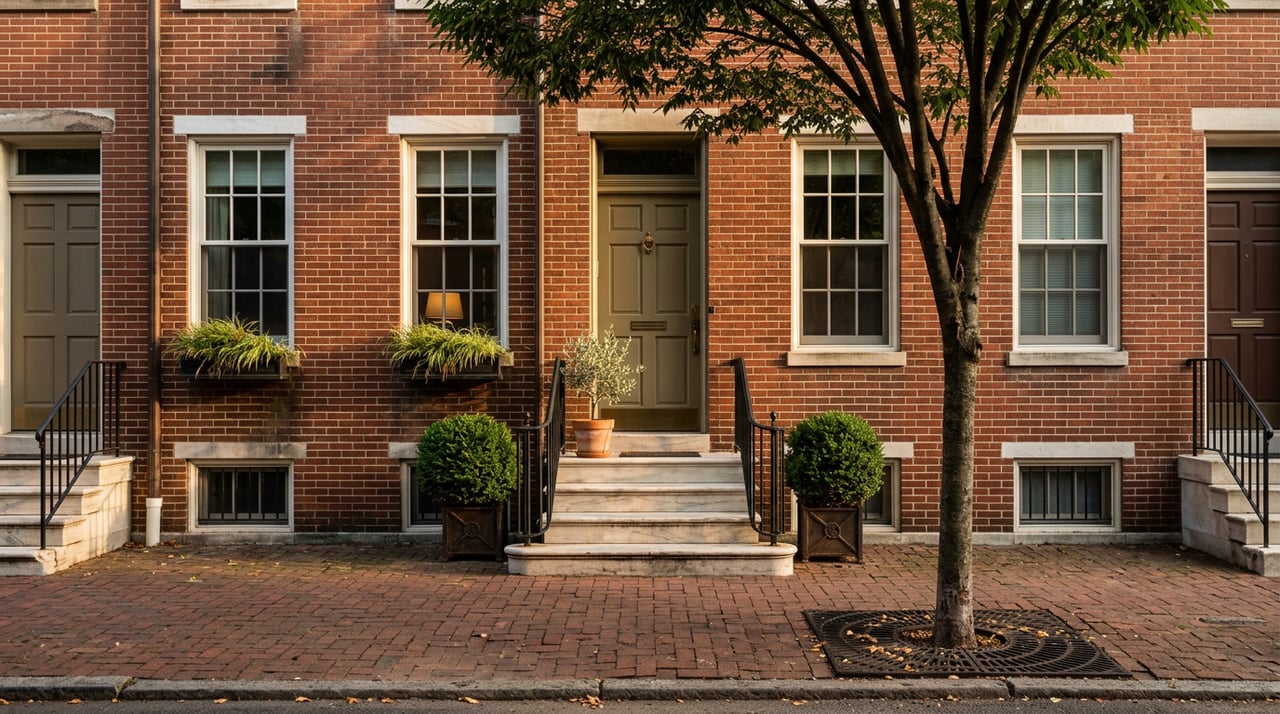
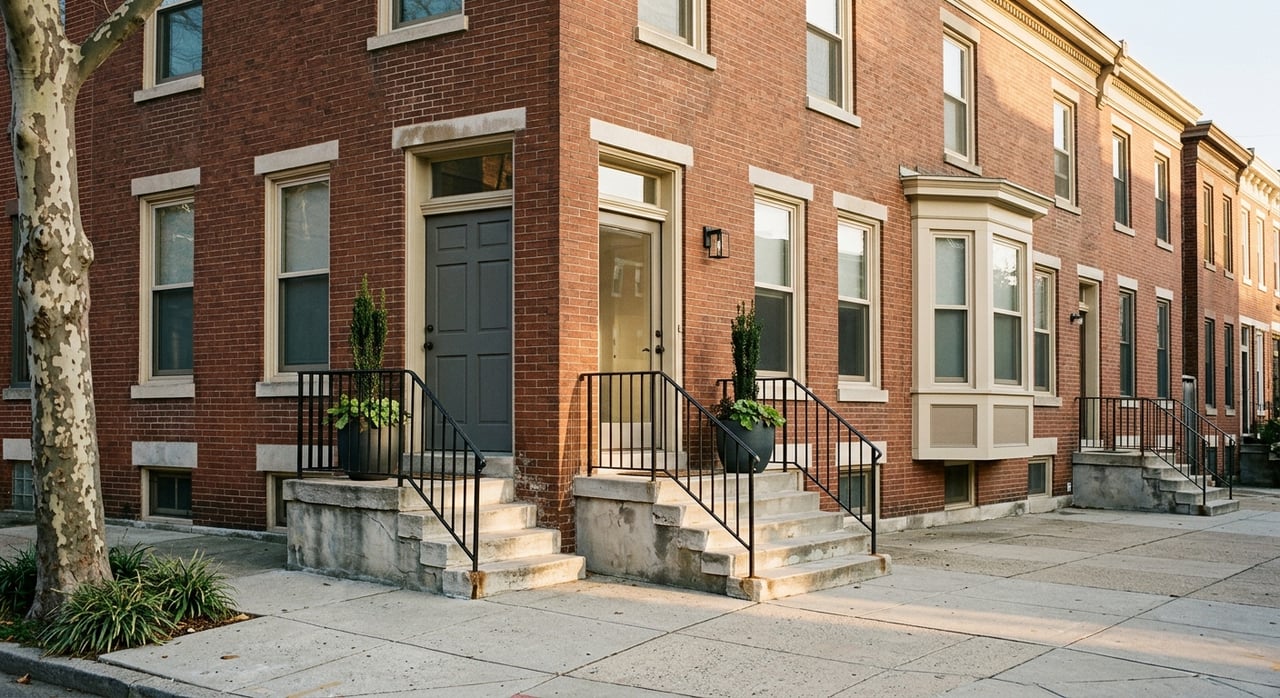
One of the first things you notice in Philadelphia is the housing style. According to the Philadelphia Rowhouse Manual, rowhouses outnumber all other housing types in the city, and they range from small trinity homes to larger townhouse and Victorian forms.
That housing pattern affects daily routines in real ways. Many rowhouses have small yards, stoops, and sometimes roof decks, which means your connection to outdoor space may include the block itself, a nearby park, or a shared streetscape rather than a large private lot. If you are moving from a suburban setting, that can feel like a meaningful lifestyle shift.
Philadelphia also has a balanced mix of owners and renters. Census data for the city shows an owner-occupied housing rate of 51.8%, a median gross rent of $1,397, and a median value of owner-occupied homes of $243,100 in 2020 to 2024. There were 679,428 households with an average of 2.26 people per household, which points to many smaller households and a large renter presence.
Getting around often means mixing modes
Transportation is a major part of what daily life looks like in Philadelphia County. SEPTA’s Metro network includes the Market-Frankford Line, Broad Street Line, Norristown High Speed Line, trolley routes, Regional Rail connections, buses, and Center City maps designed for everyday trips.
This matters because many residents do not rely on a single way of getting around. Depending on where you live and where you need to go, your day may include walking to a commercial corridor, taking transit to Center City, and using a car for some errands or appointments. Philadelphia supports that kind of mixed routine well.
At the same time, city living does not always mean short commutes. Census QuickFacts reports a mean travel time to work of 31.7 minutes in 2020 to 2024. So while the city is transit-rich and relatively compact, your experience still depends on your neighborhood, job location, and preferred mode of transportation.
Walkable corridors shape the day
Some neighborhoods make this pattern especially easy to see. Visit Philadelphia’s East Passyunk guide describes the area as highly walkable and home to more than 150 independently owned restaurants and shops.
That kind of corridor can make daily life feel efficient and social at the same time. You might walk out for dinner, pick up groceries nearby, or hop on transit for a longer trip without needing to organize your whole day around driving. In many parts of Philadelphia, that convenience is part of the appeal.
Parks are part of regular life
Philadelphia is not just brick, pavement, and rowhouses. Philadelphia Parks & Recreation manages more than 10,200 acres of public land and waterways, along with 500 recreation buildings, 166 miles of trails, and 250 playgrounds.
That scale gives you a lot of ways to build outdoor time into your week. Instead of treating parks as occasional destinations, many residents use them as a normal part of daily or weekend routines. A walk, run, playground stop, or trail ride can be much easier to fit into your schedule when green space is spread across the city.
Trails connect neighborhoods and recreation
Philadelphia’s official trail listings include the Schuylkill River Trail, Manayunk Canal Tow Path, Delaware River Trail, Forbidden Drive in Wissahickon Valley Park, Pennypack Park Trail, and Tacony Creek Trail. These routes do more than offer recreation. They help connect neighborhoods and create car-light ways to spend time outdoors.
If you value access to running, biking, walking, or simply getting outside, this is a meaningful part of local life. It adds balance to a dense urban environment and gives many neighborhoods access to more breathing room than you might expect.
FDR Park shows the everyday scale
FDR Park is a strong example of how Philadelphia uses public space. The city describes it as a 348-acre park with lakes, ballfields, a playground, a skate park, and a historic district designation.
For you, places like this can become part of normal weekly life, not just special outings. Whether you want open space, active recreation, or room to meet up with friends and family, large city parks help support that rhythm.
Food corridors define the local rhythm
If you want to understand Philadelphia, look at how people shop and eat. Neighborhood markets and food streets are a major part of daily life here, and they often reflect the city’s cultural variety.
Reading Terminal Market is open daily from 8 a.m. to 6 p.m., giving Center City a consistent indoor food destination year-round. That kind of reliable market access can be a real quality-of-life benefit if you like grabbing lunch, shopping for ingredients, or meeting people in a central location.
The South 9th Street Italian Market stretches for about 10 city blocks and is known for produce, fish, meats, spices, and prepared foods. SEPTA also notes that the market reflects a broader mix of Mexican, Vietnamese, Korean, Thai, Chinese, and Laotian food businesses alongside long-standing Italian merchants.
That blend says a lot about present-day Philadelphia. The city’s food culture is rooted in tradition, but it also keeps evolving through the people and businesses that shape neighborhood life now.
Main streets matter in Philadelphia
In many Philadelphia neighborhoods, a commercial corridor acts like a daily-use main street. East Passyunk is one example, with its walkability, transit access, and concentration of local businesses.
For buyers, renters, and sellers alike, this matters because lifestyle in Philadelphia often depends less on square footage alone and more on how your home connects to the surrounding block network. Being close to shops, markets, parks, and transit can shape your routine just as much as the home itself.
What the pace of life usually feels like
Philadelphia County does not offer one single lifestyle. Still, the overall rhythm tends to feel consistent across many areas: compact housing, neighborhood errands, transit-supported movement, and regular access to parks, trails, and food destinations.
The Rowhouse Manual captures part of this pattern through the city’s attached housing form, while the transit, market, and parks systems fill in the rest. Together, they create a version of city living that is active, local, and shaped by everyday convenience.
If you are deciding whether Philadelphia fits your goals, it helps to think beyond headline descriptions. Ask yourself how you want your days to feel. Do you want nearby errands, more walking, strong public transit options, and access to neighborhood-based routines? If so, Philadelphia may feel like a natural fit.
If you are exploring where to live in Philadelphia or planning a move within the region, working with someone who understands how neighborhood lifestyle and housing style connect can make the process much clearer. Gavin Steven Larocca can help you think through not just what home to buy or sell, but how that choice supports the way you want to live.
FAQs
What is daily life like in Philadelphia County for new residents?
- Daily life often feels neighborhood-centered, with rowhouse blocks, nearby commercial corridors, transit options, and regular access to parks, trails, and markets.
What kind of housing is most common in Philadelphia, PA?
- Rowhouses are the most common housing type in Philadelphia, ranging from smaller trinity homes to larger townhouses and Victorian-style attached homes.
How do people usually get around Philadelphia County?
- Many residents use a mix of walking, SEPTA transit, and short car trips depending on their neighborhood, destination, and daily routine.
What role do parks play in daily life in Philadelphia?
- Parks are part of regular life for many residents because the city has over 10,200 acres of public land and waterways, plus trails, playgrounds, and recreation spaces across many neighborhoods.
What makes Philadelphia food culture part of everyday living?
- Markets and neighborhood food corridors, including Reading Terminal Market, the Italian Market, and East Passyunk, make dining and shopping a visible part of the city’s daily rhythm.