Thinking about buying your first rental can feel exciting and a little intimidating at the same time. If Salem County is on your radar, you are probably looking for a market where prices may feel more approachable, but you also want to avoid costly surprises after closing. The good news is that Salem County offers a very different profile from many higher-priced New Jersey markets, and with the right questions, you can evaluate opportunities more clearly. Let’s dive in.
Why Salem County stands out
Salem County has 66,280 residents and 24,846 households, with a population density of 195.4 people per square mile. That lower-density setup gives the market a more rural feel than many other parts of New Jersey.
From an investment perspective, the county also looks different on paper. About 71.0% of occupied units are owner-occupied, the median owner-occupied home value is $239,500, and the median gross rent is $1,253. Compared with New Jersey overall, both home values and rents are notably lower, which can make Salem County worth a closer look if you want a lower entry point.
What first-time landlords should notice
A lower purchase price does not automatically mean an easy rental. In Salem County, value matters, but so does careful underwriting. You want to compare likely rent, repair risk, and local operating requirements before you decide a property is truly a good deal.
The county also had only 64 building permits reported in 2024. That is not proof of a shortage by itself, but it does suggest that new construction is not flooding the local market.
Typical rental properties in Salem County
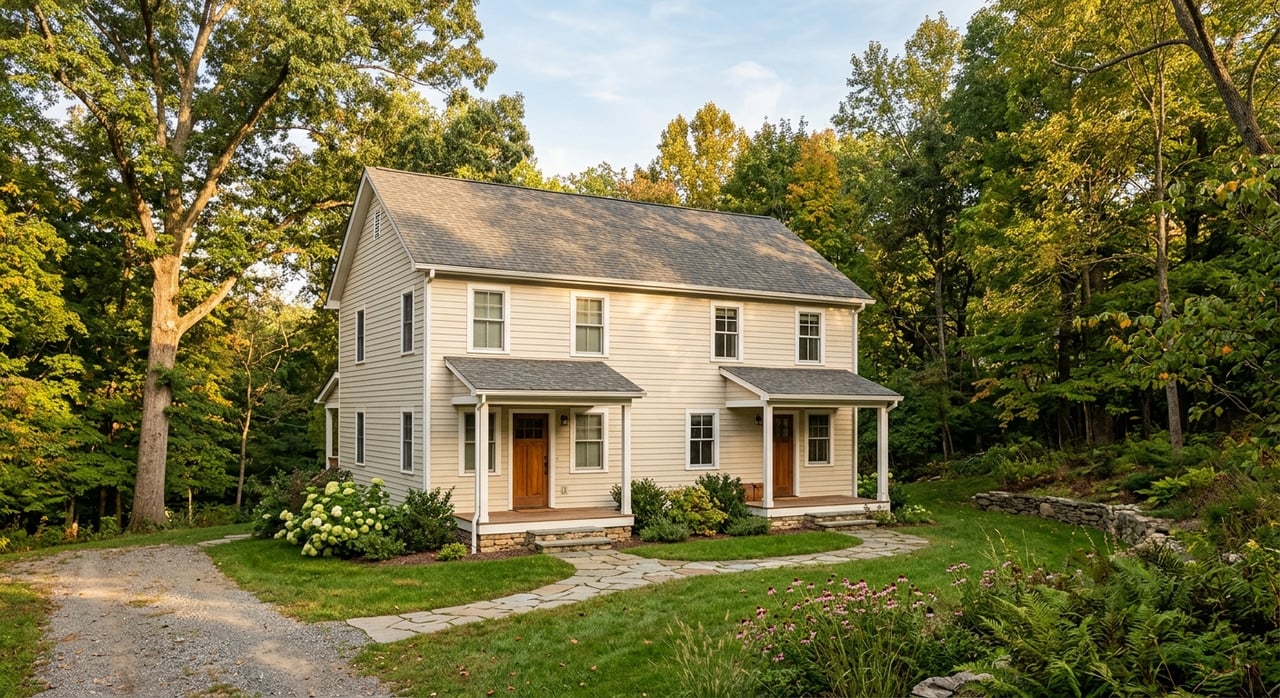
If you are buying your first rental here, your search will likely look different from a search in a more apartment-heavy market. A 2025 county housing plan comparison reports that 74.3% of Salem County housing stock is single-family detached, compared with 52.7% statewide.
That housing mix points many first-time investors toward detached homes and other small-scale residential properties. Instead of focusing on large multifamily communities, you may spend more time evaluating individual houses, smaller rental setups, and properties with more hands-on maintenance needs.
Why property type matters
Single-family rentals can be attractive because they are often easier for first-time investors to understand. You are usually dealing with one set of systems, one lease, and a product type that is common in the local housing stock.
At the same time, single-family ownership can be more operationally involved. You may need to plan for lawn care, snow removal, routine repairs, and after-hours maintenance in a way that feels more direct than in a condo or larger building.
Rent benchmarks to use early
When you first run numbers, it helps to use a few rent references instead of relying on one listing or one online estimate. Salem County’s median gross rent is $1,253, which gives you a broad county-level affordability snapshot.
For early screening, New Jersey’s FY2026 fair market rent benchmarks for Salem County are also useful. Those benchmarks list $1,397 for an efficiency, $1,520 for a one-bedroom, $1,810 for a two-bedroom, $2,170 for a three-bedroom, and $2,423 for a four-bedroom.
These are not guaranteed rents. They are best used as underwriting guideposts while you also compare actual local rental comps.
A smart way to check the math
Before you move forward on any property, look at:
- The county’s median gross rent
- The state fair market rent benchmark for the unit size
- Actual nearby comparable rentals
- Your estimated mortgage payment
- Taxes, insurance, and maintenance costs
- Vacancy and turnover risk
This matters because Salem County may offer better entry pricing, but tenant affordability still has limits. A property only works if the numbers make sense in the real market, not just in a listing spreadsheet.
Older homes need closer due diligence
One of the biggest issues first-time landlords should pay attention to in Salem County is age of housing. New Jersey’s Consolidated Plan says the number of housing units built before 1980 ranged to almost 21,000 in Salem County.
That matters because older homes can come with more repair needs and more compliance questions. Systems may be dated, maintenance may have been deferred, and certain health and safety issues may need extra review.
Lead-based paint is a real consideration
New Jersey notes that homes built before 1980 may carry lead-based paint hazards. For rentals built before 1978, certain single-family, two-family, and multiple-dwelling units must be inspected for lead-based paint hazards every three years or upon tenant turnover, unless there is a valid lead-safe certificate in place.
If you are touring an older home, do not treat this as a minor detail. Paint condition, friction surfaces like windows, and any available lead documentation should be part of your due diligence early in the process.
Well and septic questions matter here
In more rural parts of Salem County, infrastructure can affect your budget in ways buyers from denser markets may not expect. The county Health Department says private wells in real estate transactions must be tested under the Private Well Testing Act.
The Health Department also reviews permits and inspections for subsurface sewage disposal systems and real-property transfers. In plain terms, if a home has a private well or septic system, you should budget for testing, inspections, and potential repair risk.
Questions to ask on a property tour
When you walk a possible rental, ask:
- Is the property on public water and sewer?
- If not, does it have a private well or septic system?
- Can the seller provide permit records?
- Are recent water test results available?
- Is there a septic inspection history?
- Was the home built before 1978?
- If so, is there lead-safe documentation or a recent lead inspection?
These questions can help you avoid turning an affordable purchase into a much more expensive ownership experience.
New Jersey rules to know before closing
If this is your first rental, it is important to understand that buying the property is only part of the job. You also need a basic plan for operating it correctly under New Jersey rules.
The New Jersey Department of Community Affairs says landlords must distribute the Truth in Renting guide. The state’s Security Deposit Law also governs how residential security deposits are held and returned.
Local rent rules can vary
One common mistake new landlords make is assuming there is one countywide rule for rent increases. New Jersey DCA maintains a rent-control survey because rent-increase rules can vary by municipality.
That means you should verify local requirements for the specific town where you are buying. It is a good reminder that a rental strategy should be tailored to the property and municipality, not copied from another deal.
Flood disclosure is now part of the process
New Jersey requires a landlord flood-risk notice for rental properties, with the state form applicable beginning March 20, 2024. If a property is in or near a flood-prone area, that disclosure should be treated as a normal part of rental due diligence.
This is especially important when you are evaluating long-term ownership costs. Flood-related risk can affect insurance, tenant communication, and your overall comfort level with the property.
Fair and lawful tenant practices matter
New Jersey’s Law Against Discrimination prohibits discriminatory rental practices. For a first-time landlord, that means your screening standards, lease language, and tenant-selection process should be consistent, lawful, and reviewed carefully with New Jersey-based professionals.
It is better to build a clean process from the start than to improvise after you already own the property. Good systems can protect both your investment and your peace of mind.
A simple first-rental strategy
If you are considering your first rental in Salem County, a practical approach usually works best. Start by narrowing your search to properties that make sense on paper, then dig into the specific details that could affect ownership.
A helpful checklist includes:
- Focus on realistic rent, not best-case rent
- Compare asking price with local housing and rent benchmarks
- Review age and condition of major systems
- Confirm water, sewer, well, and septic setup
- Check for lead-related documentation when relevant
- Ask about flood-risk disclosure if applicable
- Verify local operating and municipal requirements before closing
This kind of disciplined review can help you separate a promising opportunity from a property that only looks good at first glance.
Why local guidance helps
A first rental purchase has more moving parts than many buyers expect. You are not just choosing a home. You are evaluating product type, rent potential, maintenance exposure, and compliance issues at the same time.
That is where local market knowledge becomes valuable. A calm, strategic buying process can help you compare options, ask better questions, and avoid missing details that matter after settlement.
If you are weighing your first rental in Salem County, working with an agent who understands both the regional market and the practical side of evaluating property can make the process feel much clearer. When you are ready to talk through your options, connect with Gavin LaRocca.
FAQs
What makes Salem County appealing for a first rental?
- Salem County offers a lower-density market with lower median home values and lower median gross rent than New Jersey overall, which can make it worth considering for buyers seeking a lower entry point.
What property type is most common for rentals in Salem County?
- Salem County’s housing stock is heavily weighted toward single-family detached homes, so many first-time investors will likely spend more time evaluating detached houses and other small-scale residential properties.
What rent numbers should you review for a Salem County rental?
- You should compare the county median gross rent of $1,253, the FY2026 fair market rent benchmarks by bedroom count, and actual local comparable rentals before estimating income.
What should you ask about wells and septic systems in Salem County?
- You should ask whether the property uses public water and sewer or private systems, and if private, request permit records, water test results, and septic inspection history.
What lead-paint rules matter for older Salem County rentals?
- For certain pre-1978 rental units in New Jersey, lead-based paint hazard inspections are required every three years or at tenant turnover unless a valid lead-safe certificate is already in place.
What New Jersey landlord rules should first-time rental owners review?
- First-time owners should review the Truth in Renting guide requirement, Security Deposit Law rules, municipal rent-control requirements where applicable, flood-risk notice rules, and fair housing compliance before closing.